Materials:
Recycling:
Product Care:
Traceability:
Country of Overall Origin:
About Us:
Product Description:
Natural Wood Bumblebee House with Bark Roof and Lift-Up Lid
Provides a sheltered potential nesting place for bumblebees
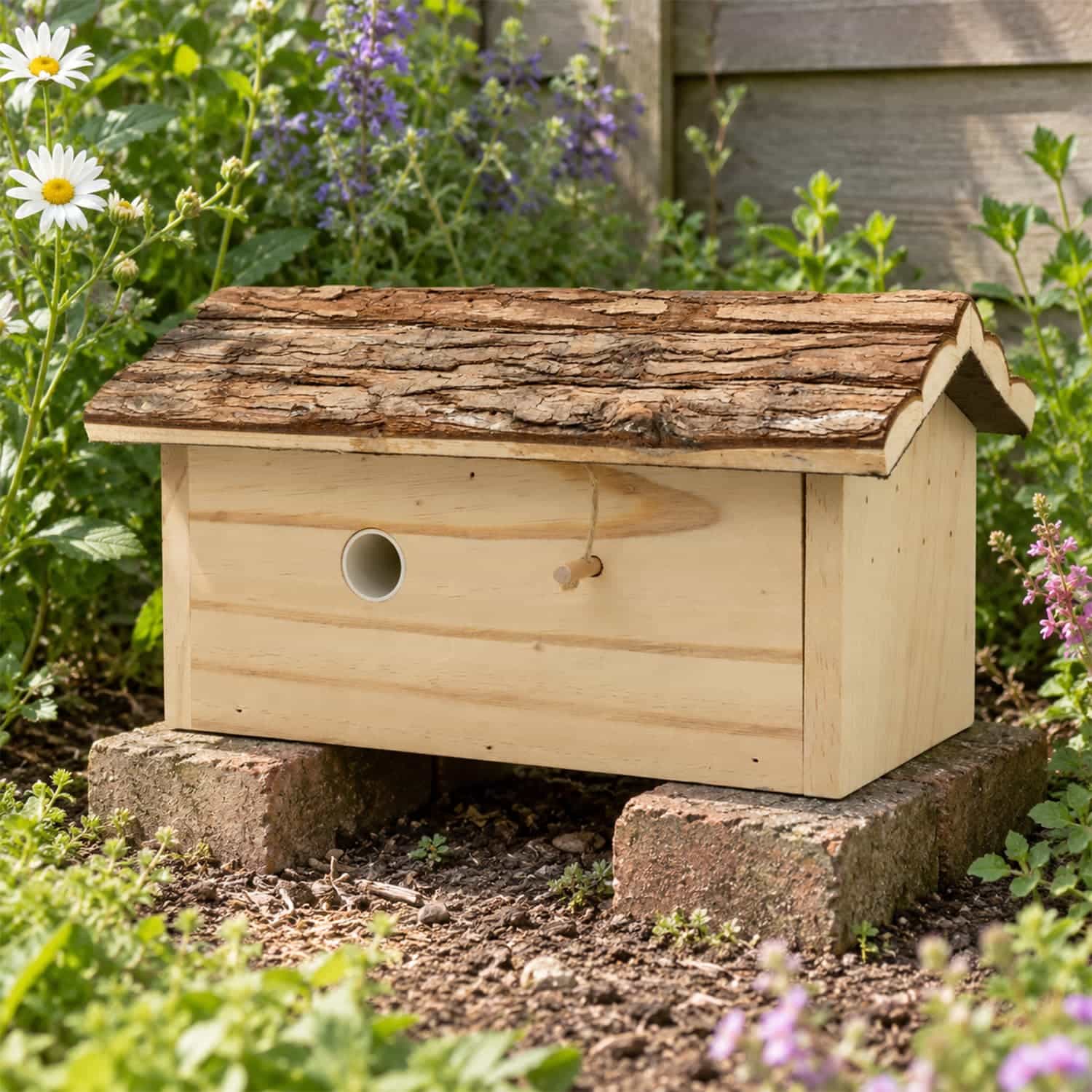
Creates a more wildlife-friendly garden with this Natural Wood Bumblebee House, designed to provide queen bumblebees with a sheltered space to investigate when searching for a suitable nesting site. Made from natural wood and finished with a distinctive rustic bark roof, it is both a practical wildlife feature and an attractive addition to a garden, flower border or sheltered planted area.
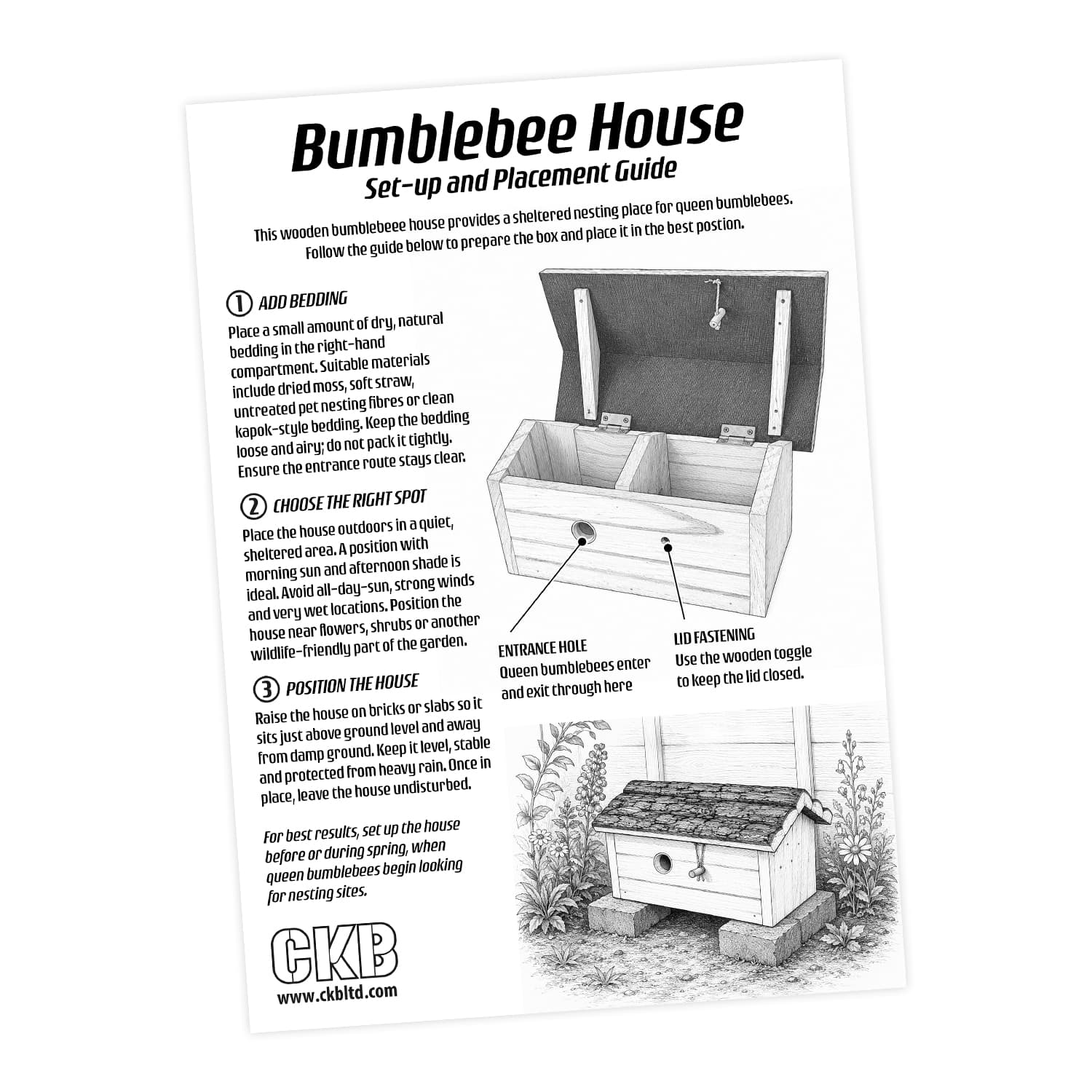
The house features a specially divided interior with a separate entrance section and nesting chamber. This arrangement allows the entrance route to remain relatively clear while suitable nesting material can be placed inside the more protected right-hand compartment.
Separate entrance and nesting chambers
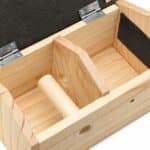
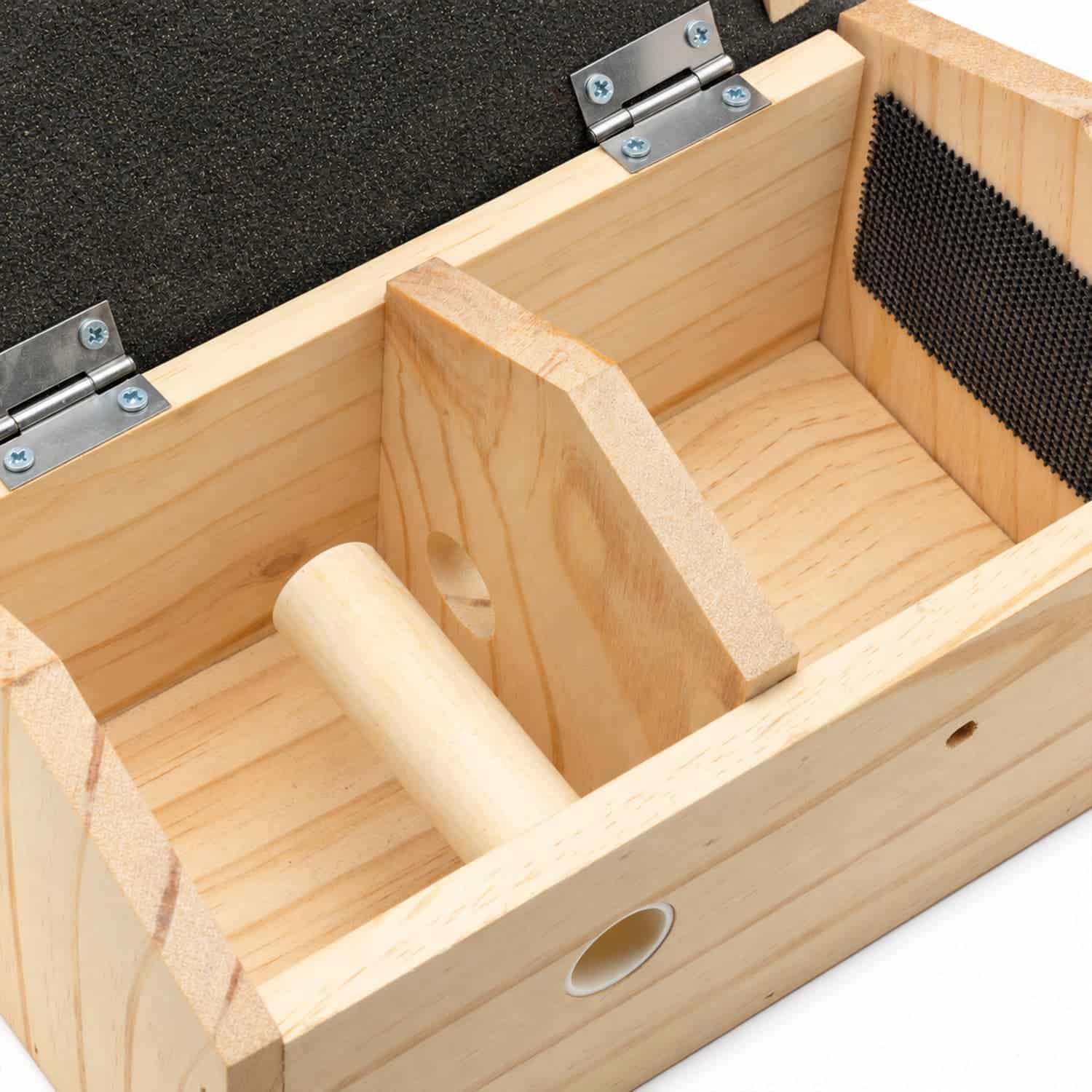
The internal layout has been designed to provide two different areas. Bumblebees enter through the circular opening at the front and travel through the left-hand entrance section before reaching the nesting compartment through the opening in the wooden divider.
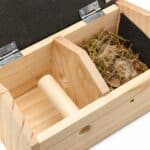
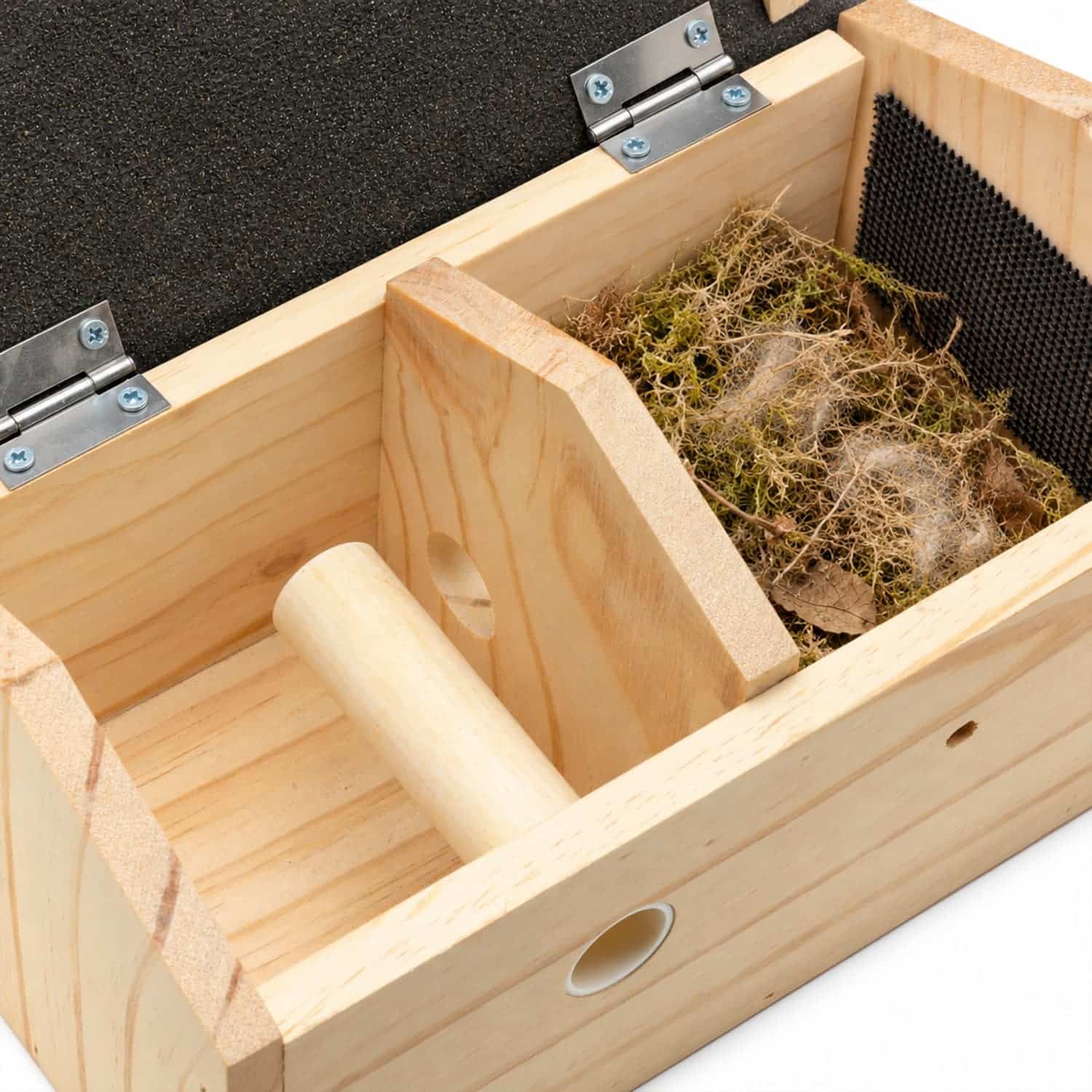
The right-hand chamber is intended to hold a small amount of soft, dry nesting material. Keeping the nesting area separate from the entrance helps create a more sheltered cavity while leaving a clear route into the house.
Prepare the nesting area before positioning the house
Place a small amount of dry, natural bedding loosely inside the right-hand compartment. Suitable materials include dried moss, untreated pet nesting fibres or clean kapok-style bedding.
The material should be kept loose and airy rather than being compressed or packed tightly. The aim is to create a soft, sheltered nesting area that a queen can investigate and arrange herself.
The left-hand entrance compartment should remain largely clear. A few stray fibres or pieces of moss are not a problem, but the entrance tube and route through to the nesting chamber should not be deliberately blocked with bedding.
Natural rustic bark roof
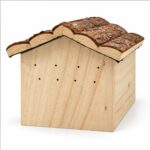
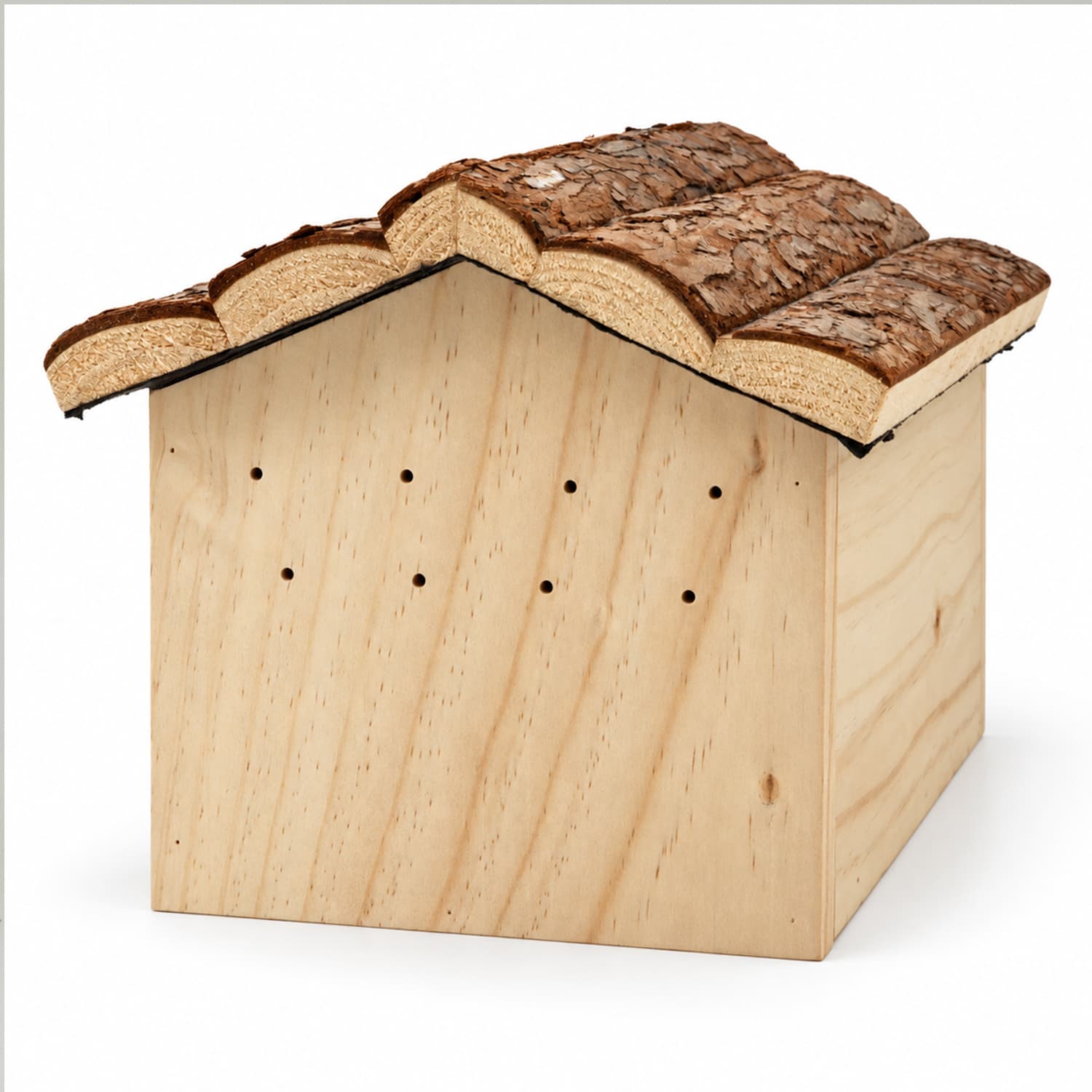
The house is topped with a textured bark-covered wooden roof that gives it a natural woodland appearance. Each bark surface has its own variations in texture, colour and grain, helping the house blend naturally amongst flowers, shrubs and other garden planting.
The projecting roof also helps shelter the wooden body, although the house should still be positioned in a protected location rather than somewhere exposed to persistent heavy rain.
Lift-up lid for easy preparation
The roof is hinged so the interior can be accessed when initially preparing the house. This allows the nesting material to be positioned easily inside the correct compartment before the house is put outdoors.
Ventilated internal design
The nesting chamber includes a fitted ventilation mesh panel together with small ventilation holes in the wooden body. These help encourage gentle airflow through the house while keeping the nesting area enclosed and sheltered.
A simple wooden toggle fastening helps keep the lid closed. Once the house has been positioned, it is best to avoid repeatedly opening it. If bumblebees begin showing interest in the house or activity is seen around the entrance, the nest should be left undisturbed.
Where to position the bumblebee house
Choose a quiet, sheltered part of the garden where there is minimal disturbance from people, pets and regular garden activity. A location receiving morning sunshine followed by afternoon shade is a good choice.
Avoid exposed areas receiving strong winds, intense all-day sunshine or excessive rain. Positioning the house close to flowering plants, shrubs or another wildlife-friendly part of the garden also provides nearby foraging opportunities for visiting bumblebees.
Raise the house slightly above the ground
For best results, place the house on bricks, slabs or another stable support so that it sits just above ground level rather than directly on damp soil.
Keep the house level and stable and ensure the entrance remains unobstructed. Once a suitable position has been chosen, leave the house in place rather than regularly moving it around.
Set up before or during spring
The most useful time to prepare the house is before or during spring, when overwintered queen bumblebees begin emerging and searching for potential nesting sites.
A queen may investigate several locations before selecting a nest site, and occupation can never be guaranteed. Correct preparation, suitable placement and minimal disturbance can, however, help provide an appropriate potential nesting opportunity.
What happens if a queen uses the house?
A bumblebee colony begins with a single queen. After establishing a nest, she lays her first eggs and initially carries out the work of collecting food and caring for the developing brood herself.
Once the first worker bumblebees emerge, they begin helping with foraging and nest duties while the queen concentrates increasingly on laying further eggs. The colony can then gradually increase in size throughout the season.
An occupied bumblebee nest will not remain as neat as the original set-up. The bees naturally rearrange moss, fibres and other nesting material, creating a dense, irregular and often untidy-looking nest. Most brood remains concealed within the material rather than being clearly visible on the surface.
Support a more wildlife-friendly garden
Bumblebees are valuable pollinators and visit a wide range of flowers, fruit blossom and garden plants. Combining suitable nesting opportunities with nectar-rich flowering plants can help create a more welcoming environment for pollinating insects.
With its natural materials, specialised internal arrangement and attractive bark roof, this bumblebee house provides a simple way to introduce an additional wildlife habitat feature to a garden.
Specifications
- Product type: Bumblebee nesting house
- Material: Natural wood
- Roof: Natural-style bark-covered wooden roof
- Width: 29 cm
- Depth: 17 cm
- Height: 15.5 cm
- Interior: Separate entrance and nesting compartments
- Entrance: Circular front entrance leading into internal passage
- Access: Hinged lift-up roof
- Closure: Wooden toggle fastening
- Nesting material: Suitable for dry moss, untreated nesting fibres or clean kapok-style bedding
- Placement: Quiet, sheltered outdoor location
- Recommended season: Set up before or during spring
Features
- Provides a sheltered potential nesting site for queen bumblebees
- Separate entrance and nesting areas
- Internal divider helps create a more secluded nesting chamber
- Lift-up hinged roof provides easy access during initial preparation
- Wooden toggle helps secure the lid
- Rustic bark roof gives the house a natural garden appearance
- Designed for use with loose natural nesting materials
- Entrance chamber can be kept clear for easy access
- Ideal for positioning near flowers, shrubs and wildlife-friendly planting
- Can be raised slightly above ground level on bricks or slabs
- Natural wood construction complements garden surroundings
- Suitable for wildlife-friendly and pollinator-friendly gardens
Contact Us:
Product Instructions:
Safety and Warnings:
Recycling and Warnings:
Product Care:
Recycling Guide:
Materials:
Product Allergens:
Traceability:
Sustainability and End-of-Life:
Certificates:
About Us:
Contact Us:
Natural Wood Bumblebee House with Bark Roof and Lift-Up Lid
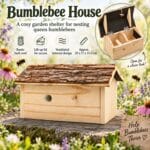
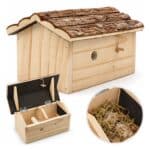
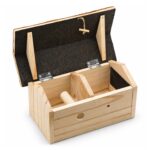
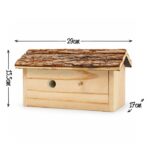

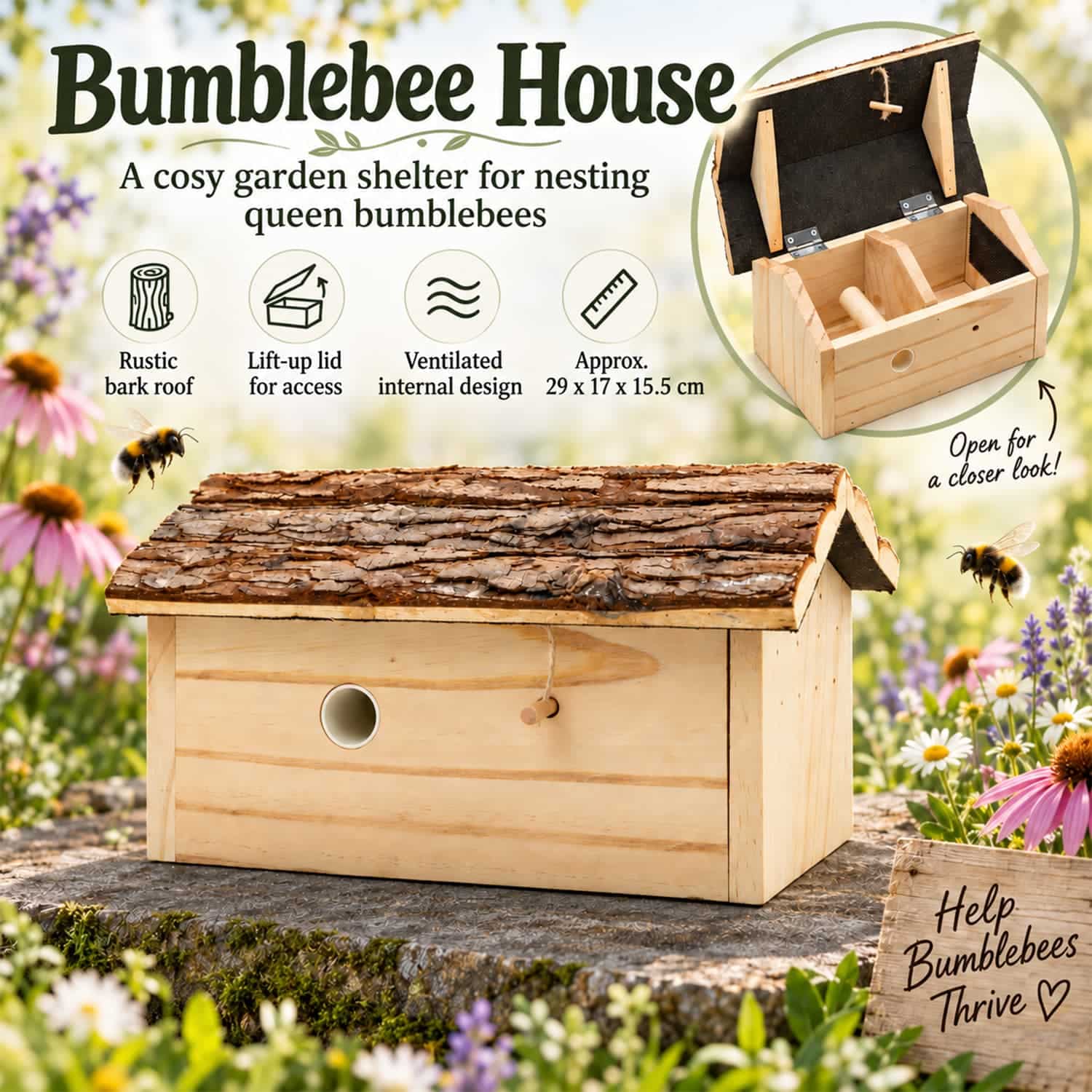
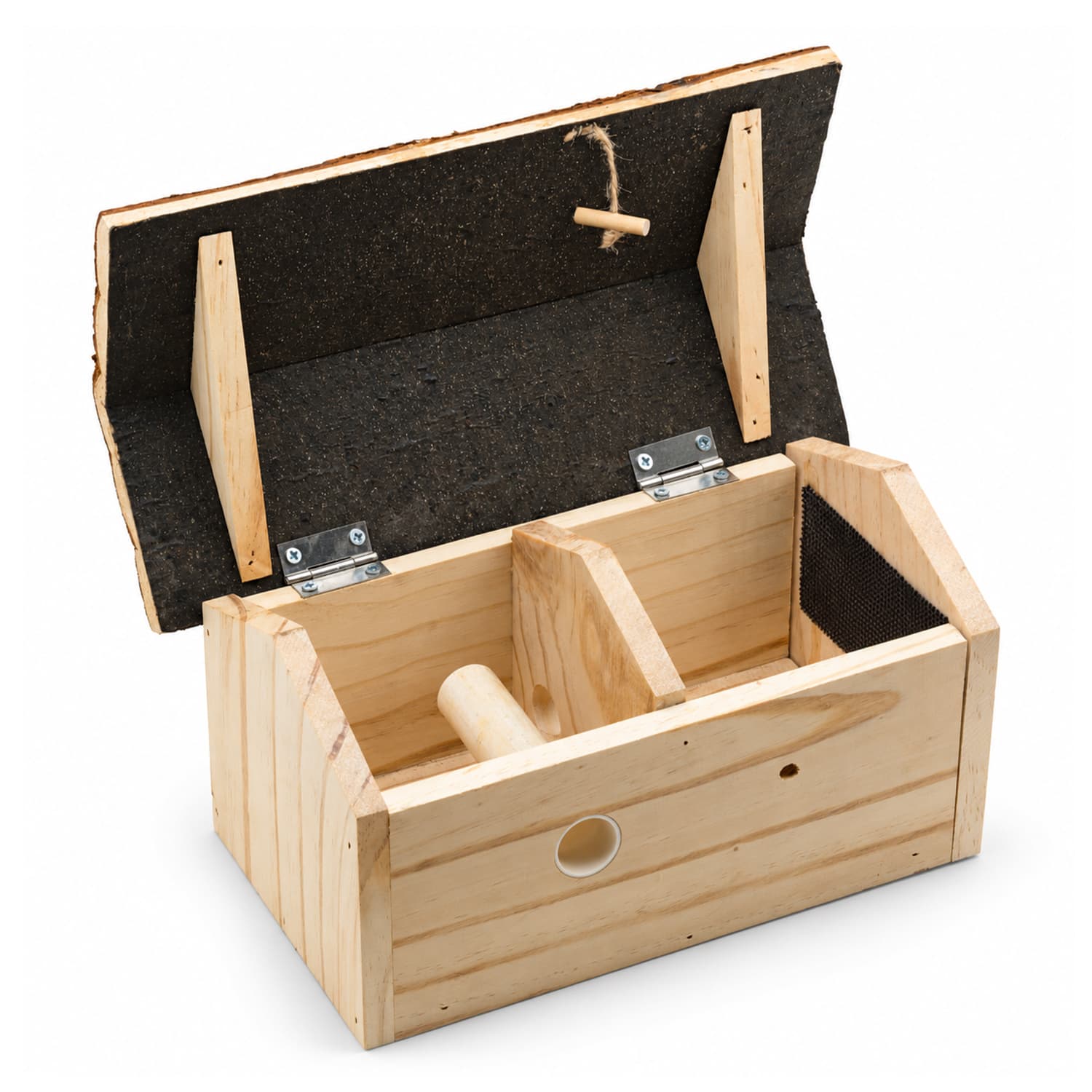
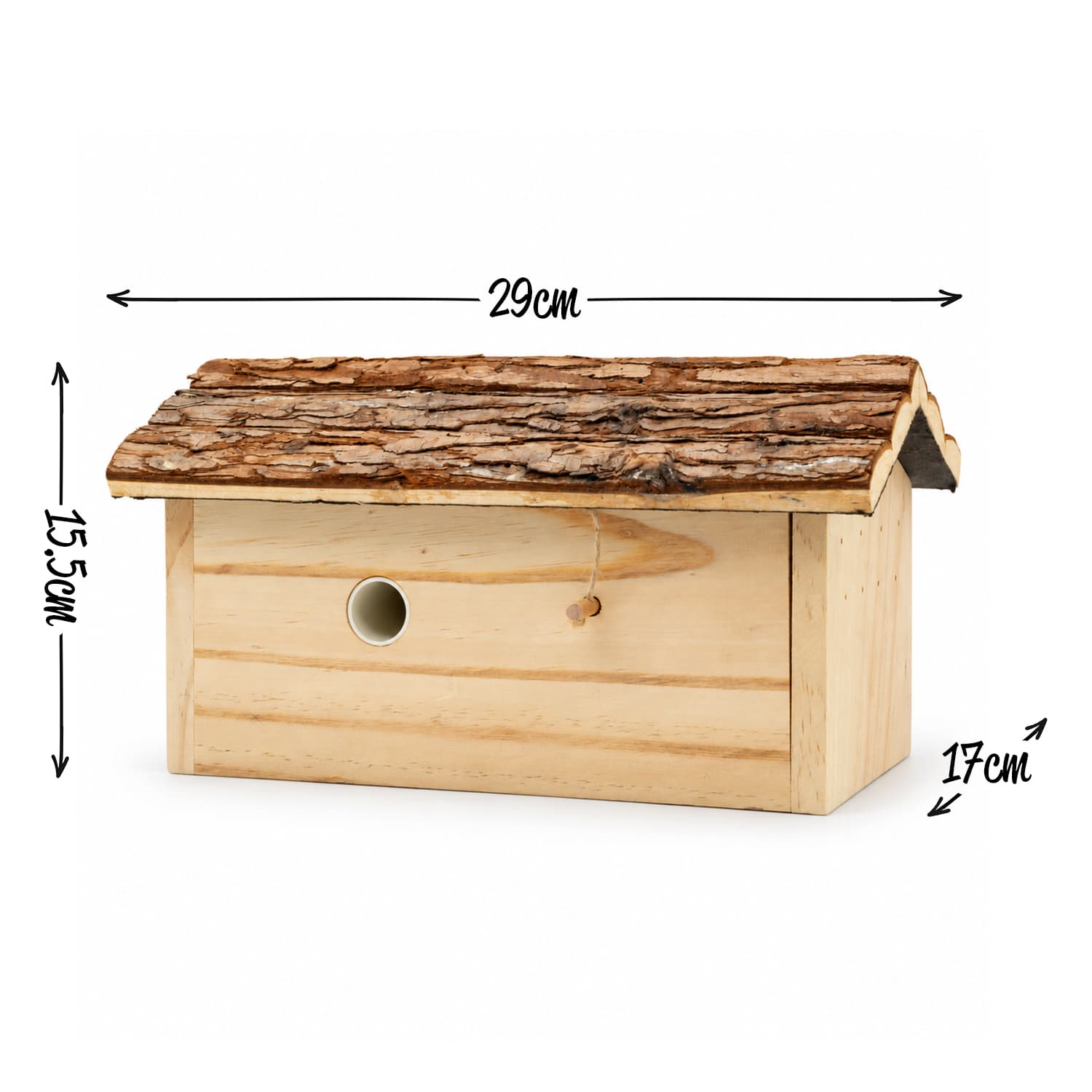
Natural wood bumblebee house with a rustic bark roof, hinged lift-up lid and separate entrance and nesting chambers. Designed to provide queen bumblebees with a sheltered potential nesting site in wildlife-friendly gardens. Measures 29 x 17 x 15.5 cm.
Natural Wood Bumblebee House with Bark Roof and Lift-Up Lid
Natural wood bumblebee house with a rustic bark roof, hinged lift-up lid and separate entrance and nesting chambers. Designed to provide queen bumblebees with a sheltered potential nesting site in wildlife-friendly gardens. Measures 29 x 17 x 15.5 cm.
Gift Wrapping: £3.99
Choose a colour and we will wrap your order for you.




Fast Same Day Despatch
If Ordered Before 2:30pm Monday to Friday
Fast Same Day Despatch
If Ordered Before 2:30pm Monday to Friday

Bulk & Trade
Bulk Buy Discounts Available
Bulk & Trade
Bulk Buy Discounts Available
Natural Wood Bumblebee House with Bark Roof and Lift-Up Lid
Provides a sheltered potential nesting place for bumblebees
Creates a more wildlife-friendly garden with this Natural Wood Bumblebee House, designed to provide queen bumblebees with a sheltered space to investigate when searching for a suitable nesting site. Made from natural wood and finished with a distinctive rustic bark roof, it is both a practical wildlife feature and an attractive addition to a garden, flower border or sheltered planted area.
The house features a specially divided interior with a separate entrance section and nesting chamber. This arrangement allows the entrance route to remain relatively clear while suitable nesting material can be placed inside the more protected right-hand compartment.
Separate entrance and nesting chambers
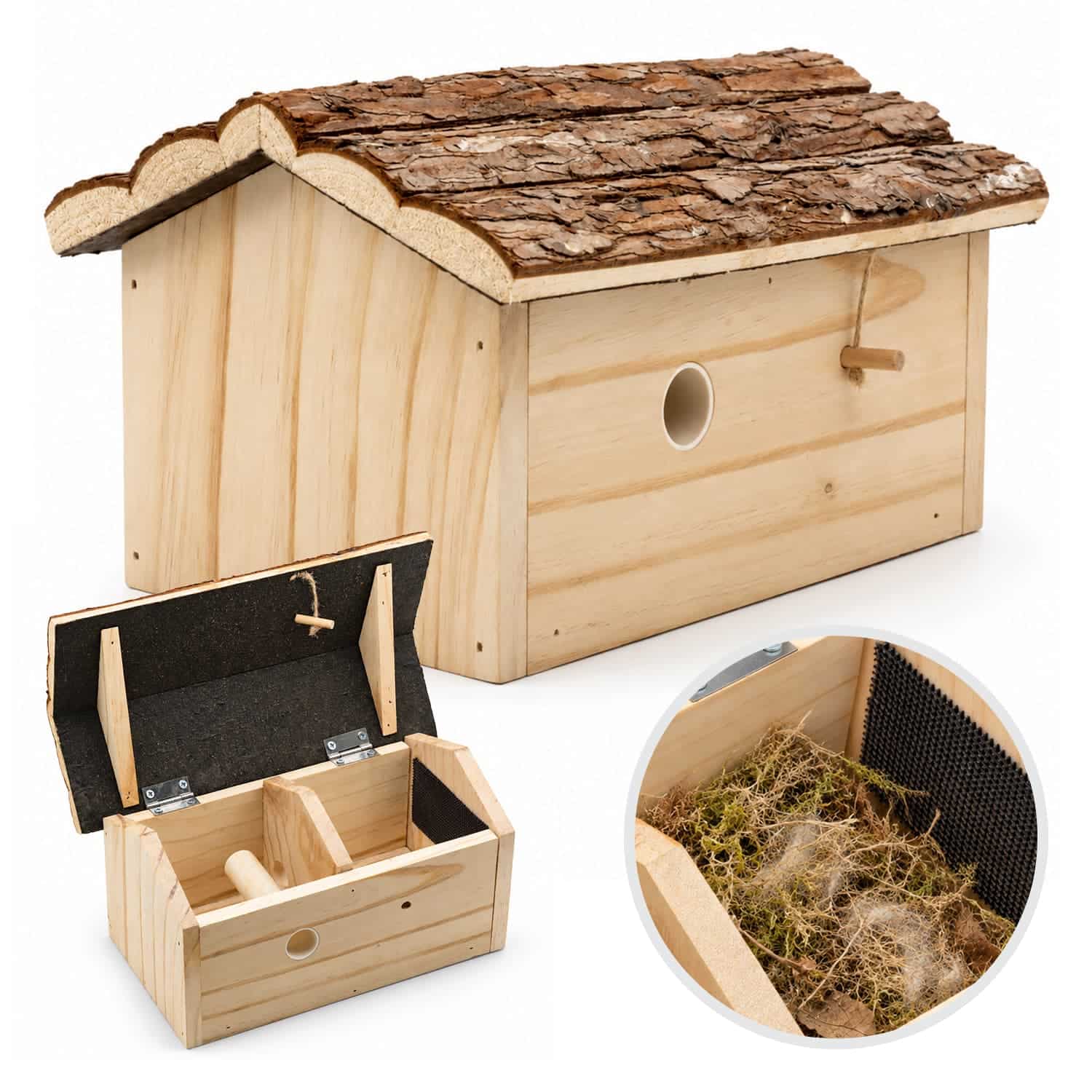
The internal layout has been designed to provide two different areas. Bumblebees enter through the circular opening at the front and travel through the left-hand entrance section before reaching the nesting compartment through the opening in the wooden divider.
The right-hand chamber is intended to hold a small amount of soft, dry nesting material. Keeping the nesting area separate from the entrance helps create a more sheltered cavity while leaving a clear route into the house.
Prepare the nesting area before positioning the house
Place a small amount of dry, natural bedding loosely inside the right-hand compartment. Suitable materials include dried moss, untreated pet nesting fibres or clean kapok-style bedding.
The material should be kept loose and airy rather than being compressed or packed tightly. The aim is to create a soft, sheltered nesting area that a queen can investigate and arrange herself.
The left-hand entrance compartment should remain largely clear. A few stray fibres or pieces of moss are not a problem, but the entrance tube and route through to the nesting chamber should not be deliberately blocked with bedding.
Natural rustic bark roof
The house is topped with a textured bark-covered wooden roof that gives it a natural woodland appearance. Each bark surface has its own variations in texture, colour and grain, helping the house blend naturally amongst flowers, shrubs and other garden planting.
The projecting roof also helps shelter the wooden body, although the house should still be positioned in a protected location rather than somewhere exposed to persistent heavy rain.
Lift-up lid for easy preparation
The roof is hinged so the interior can be accessed when initially preparing the house. This allows the nesting material to be positioned easily inside the correct compartment before the house is put outdoors.
Ventilated internal design
The nesting chamber includes a fitted ventilation mesh panel together with small ventilation holes in the wooden body. These help encourage gentle airflow through the house while keeping the nesting area enclosed and sheltered.
A simple wooden toggle fastening helps keep the lid closed. Once the house has been positioned, it is best to avoid repeatedly opening it. If bumblebees begin showing interest in the house or activity is seen around the entrance, the nest should be left undisturbed.
Where to position the bumblebee house
Choose a quiet, sheltered part of the garden where there is minimal disturbance from people, pets and regular garden activity. A location receiving morning sunshine followed by afternoon shade is a good choice.
Avoid exposed areas receiving strong winds, intense all-day sunshine or excessive rain. Positioning the house close to flowering plants, shrubs or another wildlife-friendly part of the garden also provides nearby foraging opportunities for visiting bumblebees.
Raise the house slightly above the ground
For best results, place the house on bricks, slabs or another stable support so that it sits just above ground level rather than directly on damp soil.
Keep the house level and stable and ensure the entrance remains unobstructed. Once a suitable position has been chosen, leave the house in place rather than regularly moving it around.
Set up before or during spring
The most useful time to prepare the house is before or during spring, when overwintered queen bumblebees begin emerging and searching for potential nesting sites.
A queen may investigate several locations before selecting a nest site, and occupation can never be guaranteed. Correct preparation, suitable placement and minimal disturbance can, however, help provide an appropriate potential nesting opportunity.
What happens if a queen uses the house?
A bumblebee colony begins with a single queen. After establishing a nest, she lays her first eggs and initially carries out the work of collecting food and caring for the developing brood herself.
Once the first worker bumblebees emerge, they begin helping with foraging and nest duties while the queen concentrates increasingly on laying further eggs. The colony can then gradually increase in size throughout the season.
An occupied bumblebee nest will not remain as neat as the original set-up. The bees naturally rearrange moss, fibres and other nesting material, creating a dense, irregular and often untidy-looking nest. Most brood remains concealed within the material rather than being clearly visible on the surface.
Support a more wildlife-friendly garden
Bumblebees are valuable pollinators and visit a wide range of flowers, fruit blossom and garden plants. Combining suitable nesting opportunities with nectar-rich flowering plants can help create a more welcoming environment for pollinating insects.
With its natural materials, specialised internal arrangement and attractive bark roof, this bumblebee house provides a simple way to introduce an additional wildlife habitat feature to a garden.
Specifications
- Product type: Bumblebee nesting house
- Material: Natural wood
- Roof: Natural-style bark-covered wooden roof
- Width: 29 cm
- Depth: 17 cm
- Height: 15.5 cm
- Interior: Separate entrance and nesting compartments
- Entrance: Circular front entrance leading into internal passage
- Access: Hinged lift-up roof
- Closure: Wooden toggle fastening
- Nesting material: Suitable for dry moss, untreated nesting fibres or clean kapok-style bedding
- Placement: Quiet, sheltered outdoor location
- Recommended season: Set up before or during spring
Features
- Provides a sheltered potential nesting site for queen bumblebees
- Separate entrance and nesting areas
- Internal divider helps create a more secluded nesting chamber
- Lift-up hinged roof provides easy access during initial preparation
- Wooden toggle helps secure the lid
- Rustic bark roof gives the house a natural garden appearance
- Designed for use with loose natural nesting materials
- Entrance chamber can be kept clear for easy access
- Ideal for positioning near flowers, shrubs and wildlife-friendly planting
- Can be raised slightly above ground level on bricks or slabs
- Natural wood construction complements garden surroundings
- Suitable for wildlife-friendly and pollinator-friendly gardens
Additional information
| GTN | 5061108752203 |
|---|---|
| EAN | CKB-YLN7091 |
| Suitable for | Suitable for wildlife-friendly gardens, flower borders, sheltered outdoor areas and gardens planted with bee-friendly flowers and shrubs. |
Choose a category range to view through our unique gifts and present ideas.
Home & Lifestyle
Garden & Outdoors
Health & Fitness
Office & Stationery
SOME OF OUR LATEST PRODUCTS
These are just some of our latest products
RELATED PRODUCTS
Here are just a few related products
Related products
-

Whiskey Rockers Novelty Rocking Glasses – Set of 2
£13.49 -
Pack of 2 Turbulence Bohemian Crystal Wine Glasses 350ML
£14.99 -
Bar Amigos Kingfisher Wine Aerator Bottle Pourer
£5.99 -
Final Touch 18 Bottle Wall Mounted Wine Rack
£53.98 -
Set of 2 Cognac Brandy Tumblers Snifter Angled Glasses
£29.00 -
Final Touch Conundrum Red Wine Glasses 473ml Set of 4
£31.99